

Hands-On Activities for Young Thinkers
Teach children about how images can be manipulated and how easy it is to create fake photos. This activity will help them understand that not all images reflect reality and foster critical observation skills. This increases their sensitivity to environmental issues by making them alert to details that often go unnoticed. For example, social contradictions such as encouraging people to avoid using plastic bags while wrapping in plastic items to sell stuff cheaper and force buyers to buy more quantity.
 Finanziato dall'Unione europea. Le opinioni espresse appartengono, tuttavia, al solo o ai soli autori e non riflettono necessariamente le opinioni dell'Unione europea o dell’Agenzia esecutiva europea per l’istruzione e la cultura (EACEA). Né l'Unione europea né l'EACEA possono esserne ritenute responsabili. |
 Tutti i contenuti di questo sito, in particolare testi, immagini e grafica, sono protetti da copyright. Salvo espressa indicazione contraria, il copyright è detenuto da each.eduskills.plus ed è concesso in licenza sotto la Creative Commons Attribution - Non-commercial - Distribution alle stesse condizioni di 4.0 International license. Essi possono essere soggetti ai termini della licenza. |
© 2026 each.eduskills.plus
Digital

Teach children about how images can be manipulated and how easy it is to create fake photos. This activity will help them understand that not all images reflect reality and foster critical observation skills. This increases their sensitivity to environmental issues by making them alert to details that often go unnoticed. For example, social contradictions such as encouraging people to avoid using plastic bags while wrapping in plastic items to sell stuff cheaper and force buyers to buy more quantity.
Make sure you use examples to point out that everyone belongs even if their imagination is different from the majority, and how variation in imagination increases everyone’s ability to imagine. Point out in the history of humanity people who imagined very different things contributed to the development of science, technology, arts and the humanities.
| Item | Garbage | What can people do? | Waste | What can people do? |
|---|---|---|---|---|
| Food | ||||
| Paper | ||||
| Toys | ||||
| Clothes | ||||
| Phones | ||||
| Computers | ||||
| Cars | ||||
| Supermarkets | ||||
| Factories |
Photograph children. They can take different positions but it is best if the picture shows the full body. Print the pictures and provide each child with a printed photo of themselves. Assist the children in carefully cutting out their image using scissors.
Lay out old newspapers and magazines. Let the children choose backgrounds and images and cut them out.
Children paste the backgrounds and their own pictures and the important sentences from previous discussion on a paper and bind it together as a book, leaving an empty page for parents and family to give feedback.
Use the created photobooks to discuss that not all photographs are real. Have they really been in places that are shown? Or have they created an illusion? Discuss how photos can be changed or edited and why it’s important to understand that images might not always show the truth, and that there are ways to confirm information given in images. Refer specifically to environmental issues as to reinforce that concern with sustainability is at the centre of the activity.
Collaborative thinking: have the children look at the photos and chat about the following questions.
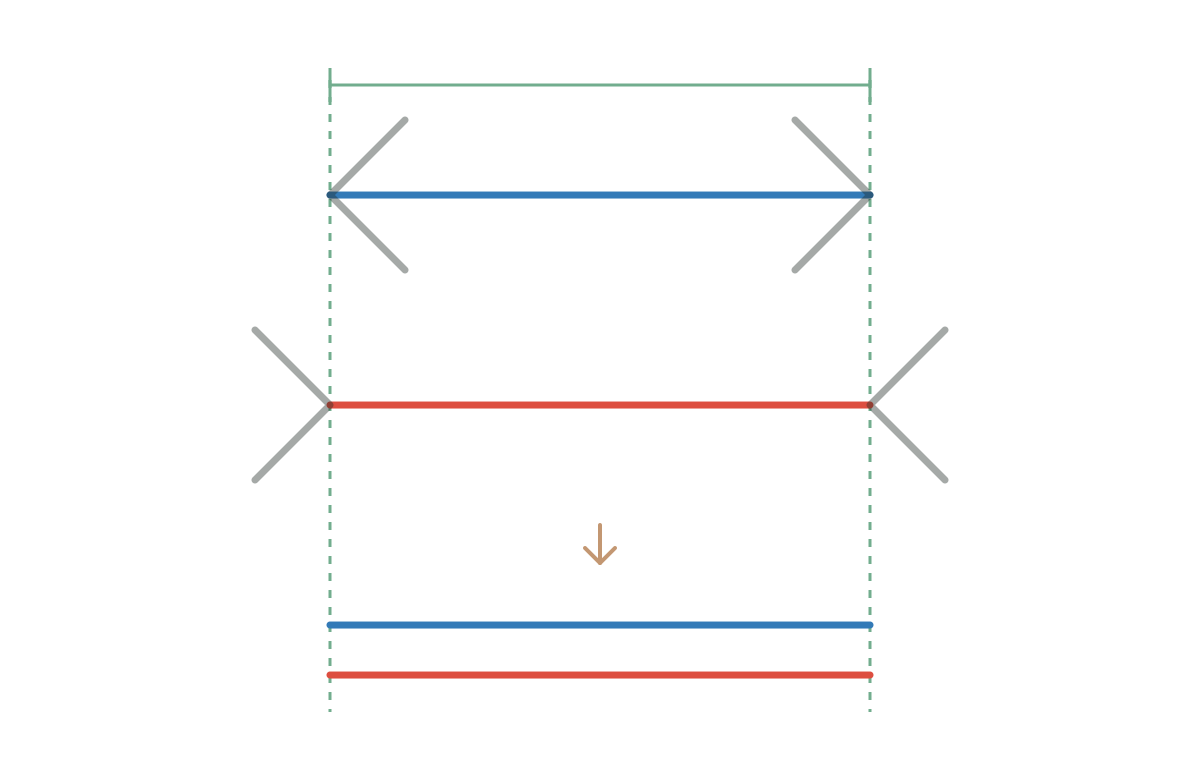
Start by showing them the Müller-Lyer illusion and talk about the appearance of the lines.
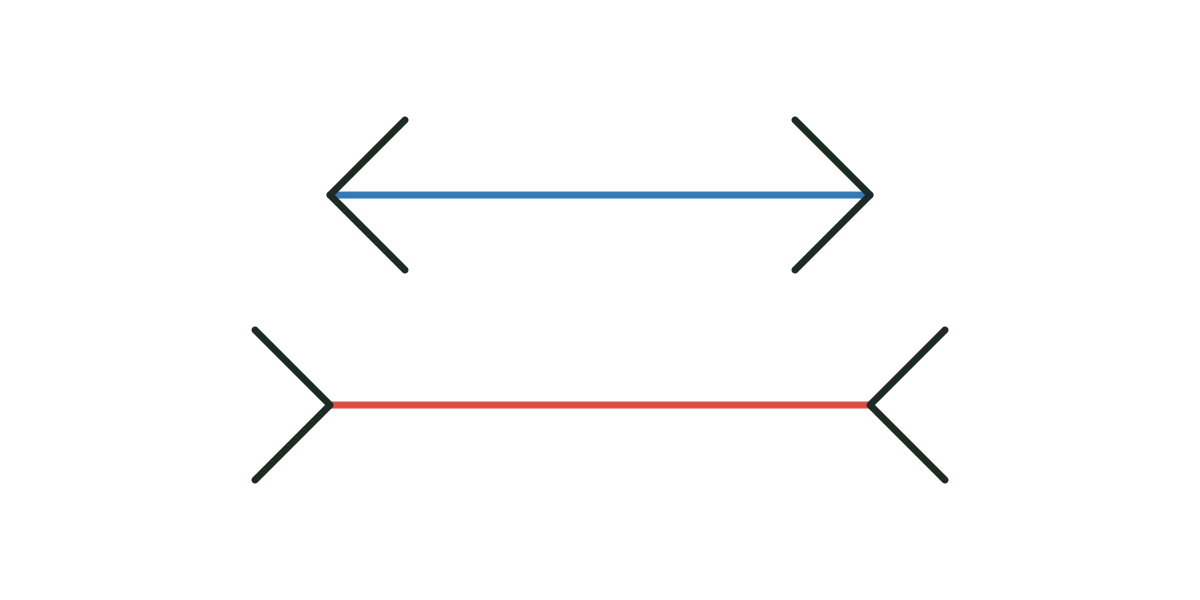
Once they have reached a conclusion of some kind, show the result of the reflection in an image like this one:
Finanziato dall'Unione europea. Le opinioni espresse appartengono, tuttavia, al solo o ai soli autori e non riflettono necessariamente le opinioni dell'Unione europea o dell’Agenzia esecutiva europea per l’istruzione e la cultura (EACEA). Né l'Unione europea né l'EACEA possono esserne ritenute responsabili.
Tutti i contenuti di questo sito, in particolare testi, immagini e grafica, sono protetti da copyright. Salvo espressa indicazione contraria, il copyright è detenuto da each.eduskills.plus ed è concesso in licenza sotto la Creative Commons Attribution - Non-commercial - Distribution alle stesse condizioni di 4.0 International license. Essi possono essere soggetti ai termini della licenza.
© 2026 each.eduskills.plus | Impressum